
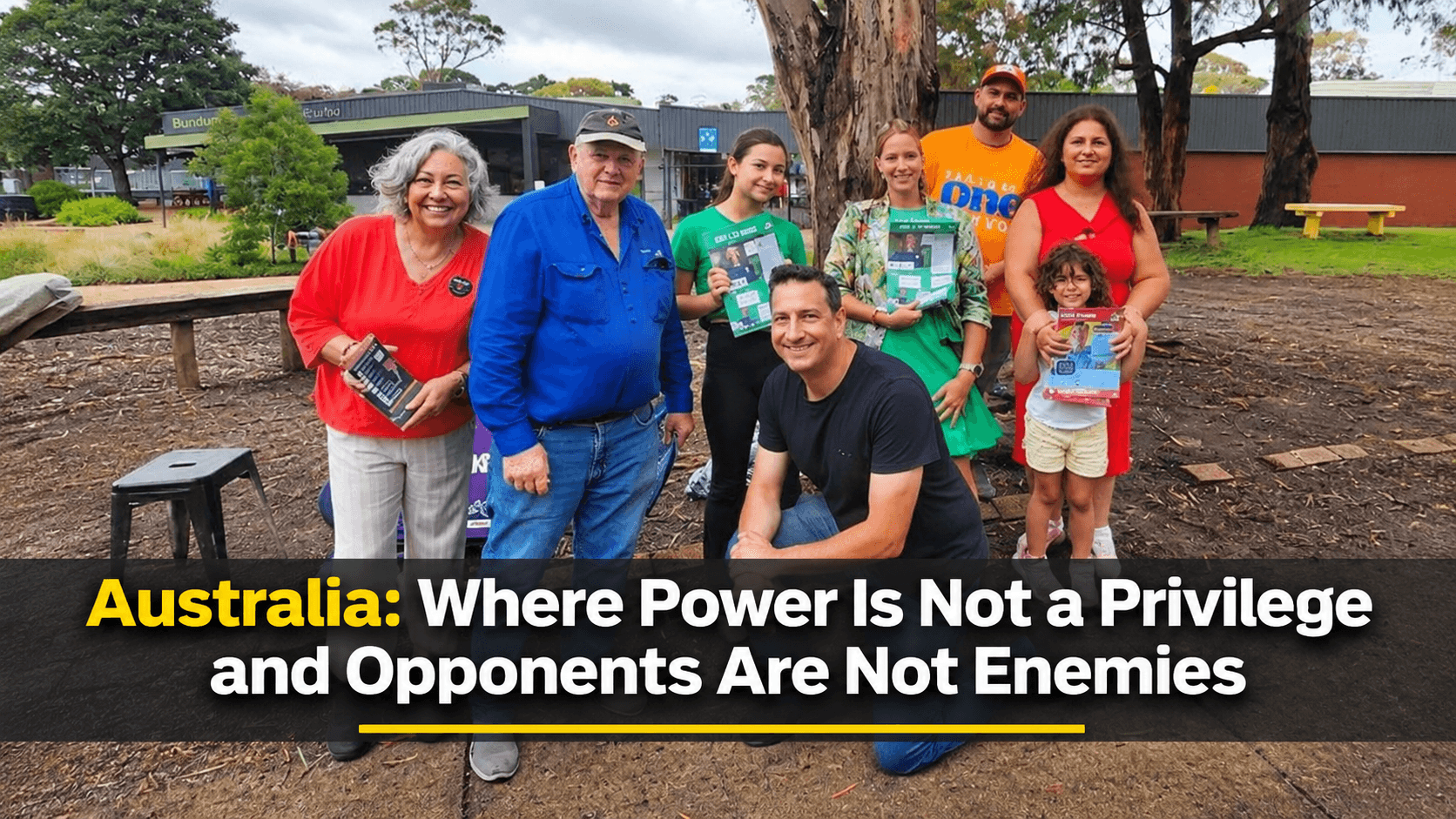
امروز، ۲۸ نوامبر ۲۰۲۶، در جریان انتخابات ایالتی ویکتوریا در استرالیا، بار دیگر شاهد صحنههایی بودم که با وجود گذشت بیش از شانزده سال از زندگیام در این کشور، همچنان برایم جذاب، تأملبرانگیز و لذتبخش است.
به قلم مسعود ظهوری
در طول این سالها، بارها از نزدیک شاهد برگزاری انتخابات در استرالیا بودهام، اما آنچه بیش از رقابت احزاب و نتایج انتخابات توجه مرا جلب میکند، فرهنگ سیاسی و اجتماعی حاکم بر روابط میان مردم، سیاستمداران و صاحبان مسئولیت است؛ فرهنگی که در آن، اختلاف عقیده به معنای دشمنی و داشتن مقام به معنای برتری بر دیگران نیست.
رقابت سیاسی در فضایی آکنده از احترام
امروز در یکی از مراکز رأیگیری، نامزدها و هواداران احزاب مختلف، با گرایشها و دیدگاههای سیاسی متفاوت، در کنار یکدیگر حضور داشتند. هر گروه برای حزب و نامزد مورد حمایت خود تبلیغ میکرد، بروشورها و برگههای راهنمای رأیدهی (How-to-Vote Cards) را میان مردم توزیع میکرد و تلاش داشت نظر رأیدهندگان را جلب کند.
در عین حال، اعضای همین گروهها با یکدیگر گفتوگو میکردند، میخندیدند و به حق انتخاب و فعالیت سیاسی یکدیگر احترام میگذاشتند.
یکی از صحنههایی که برایم بسیار جالب بود، حضور نینا لایتالا (Nina Laitala)، نامزد حزب سبز استرالیا (Australian Greens) در انتخابات ایالتی ویکتوریا بود.
او همراه با خانواده و فرزندانش در محل رأیگیری حاضر شده بود و شخصاً بروشورها و برگههای تبلیغاتی خود را میان مردم توزیع میکرد؛ بدون محافظ، بدون تشریفات و بدون آنکه فاصلهای میان خود و دیگر شهروندان ایجاد کند.
حضور خانوادگی او در این فعالیت انتخاباتی، برای من تصویری زیبا از مشارکت سیاسی و اجتماعی بود؛ تصویری که در آن، سیاست نه عرصه نمایش قدرت و برتری، بلکه بخشی از زندگی عادی شهروندان است.
در همان محل، ریک گاروتی (Rick Garotti)، معاون شهردار، نیز همراه با خانوادهاش حضور داشت. او نیز بدون محافظ، همراهان ویژه یا تشریفات اداری، همچون دیگر شهروندان در میان مردم بود.
از دیگر صحنههای قابلتوجهی که شخصاً شاهد آن بودم، حضور برخی نمایندگان پارلمان فدرال استرالیا در فعالیتهای انتخاباتی بود. با وجود اینکه انتخابات مربوط به پارلمان ایالتی ویکتوریا بود، آنان نیز برای حمایت از نامزدهای حزب خود به مراکز رأیگیری آمده بودند و دوشادوش دیگر داوطلبان، شخصاً بروشورها و برگههای راهنمای رأیدهی را میان مردم توزیع میکردند.
نه خبری از محافظان و همراهان ویژه بود، نه تشریفات و نه رفتاری که نشان دهد آنان به دلیل عضویت در پارلمان فدرال، جایگاهی بالاتر از دیگر شهروندان دارند. نمایندگانی که در سطح ملی مسئولیت سیاسی دارند، در آنجا همان کاری را انجام میدادند که یک داوطلب عادی حزبی انجام میداد.
آنچه برایم بیش از هر چیز جالب بود، این بود که در رفتار و مناسبات اجتماعی حاضران، تفاوتی میان یک نماینده پارلمان فدرال، یک معاون شهردار، یک نامزد انتخابات و یک شهروند عادی احساس نمیشد.
احترام افراد به یکدیگر، نه بر اساس جایگاه اداری و سیاسی، بلکه بر پایه شأن و کرامت انسانی آنان بود.
آنچه در این میان اهمیت داشت، تعلق این افراد به یک حزب یا جریان سیاسی خاص نبود؛ بلکه شیوه رفتار آنان با مردم و رقبای سیاسیشان بود.
افراد با وجود اختلافنظرهای سیاسی، حق حضور، فعالیت و اظهار عقیده یکدیگر را به رسمیت میشناختند.
به باور من، این همان بلوغ سیاسی و اجتماعی است که یکی از ارزشمندترین دستاوردهای یک جامعه دموکراتیک محسوب میشود.
وقتی نماینده مجلس هم در صف خرید ساندویچ میایستد
یکی از زیباییهای زندگی در استرالیا، مشاهده رفتارهای سادهای است که شاید در نگاه نخست چندان مهم به نظر نرسند، اما مفاهیم عمیقی در خود دارند.
وقتی یک نماینده مجلس یا شهردار برای خرید یک ساندویچ در صف میایستد، انتظار ندارد مردم به احترام مقامش کنار بروند یا فروشنده خارج از نوبت به او خدمات ارائه دهد.
او نیز مانند دیگران یک شهروند است؛ با همان حقوق و همان وظایف.
مقام سیاسی برای او حق تقدم در صف، برتری اجتماعی یا مصونیت از انتقاد ایجاد نمیکند.
در منطق دموکراسی، کسی که امروز نامزد انتخابات است، پیش از انتخاب شدن یک شهروند عادی است و پس از انتخاب شدن نیز همچنان یک شهروند باقی میماند؛ با این تفاوت که مسئولیت بیشتری بر عهده گرفته است.
جایگاه سیاسی او حاصل اعتماد و انتخاب مردم است و این جایگاه دائمی نیست. همان مردمی که امروز او را انتخاب میکنند، میتوانند در انتخابات بعدی با رأی خود مسئولیت را از او بگیرند.
از سوی دیگر، او موظف است پاسخگوی همه شهروندان باشد؛ نهتنها کسانی که به او رأی دادهاند، بلکه حتی کسانی که مخالف او بودهاند و به رقیبش رأی دادهاند.
نماینده مجلس پس از انتخاب شدن، نماینده تمام مردم حوزه انتخابیه خود است، نه صرفاً هواداران حزبش.
رأی مردم به یک سیاستمدار، سند برتری او بر دیگران نیست؛ بلکه قراردادی برای پذیرش مسئولیت و خدمت به جامعه است.
وقتی مسئولیت به ابزاری برای نمایش قدرت تبدیل میشود
وقتی این صحنهها را میبینم، ناخودآگاه به تجربهها و مشاهدات خود از ایران فکر میکنم.
در ایران، بارها شاهد بودهایم که حتی برخی مسئولان در سطوح محلی و منطقهای، از محافظان، همراهان متعدد، خودروهای ویژه و تشریفاتی برخوردارند که فاصلهای محسوس میان آنان و مردم عادی ایجاد میکند.
گاهی یک نماینده مجلس، شهردار یک منطقه یا حتی فردی با مسئولیتی محدود، چنان با محافظان، خودروهای ویژه و همراهان متعدد در جامعه ظاهر میشود که گویی از جایگاهی فراتر از دیگر شهروندان برخوردار است.
البته تأمین امنیت مسئولان در شرایطی که تهدید واقعی وجود دارد، امری ضروری و قابل درک است و در استرالیا و دیگر کشورهای دموکراتیک نیز متناسب با شرایط امنیتی انجام میشود.
اما مسئله زمانی آغاز میشود که حفاظت و تشریفات، بهجای پاسخ به یک ضرورت امنیتی، به نمادی از قدرت، منزلت اجتماعی و برتری نسبت به دیگران تبدیل شود.
وقتی یک مسئول برای ورود به مکانی عمومی انتظار دارد دیگران کنار بروند، وقتی برای ملاقات با او باید از موانع متعدد عبور کرد و وقتی مقام اداری به ابزاری برای کسب امتیازات ویژه تبدیل میشود، بهتدریج نوعی دوگانگی در جامعه شکل میگیرد؛ صاحبان قدرت در یک سو و مردمی که قرار است به آنان خدمت شود، در سوی دیگر.
این فاصله تنها یک فاصله فیزیکی نیست؛ فاصلهای روانی، اجتماعی و فرهنگی است که اعتماد عمومی را فرسوده میکند، احساس نابرابری را گسترش میدهد و مفهوم خدمتگزاری را تحتالشعاع قرار میدهد.
در چنین فضایی، ممکن است انگیزه برخی افراد برای دستیابی به مسئولیت، نه خدمت به جامعه، بلکه برخورداری از امتیازات، امکانات و منزلت اجتماعی ناشی از آن مقام باشد.
بهتدریج، مسئولیت که باید وسیلهای برای خدمت به مردم باشد، به ابزاری برای فاصله گرفتن از آنان تبدیل میشود.
امنیتی که با تعداد محافظان سنجیده نمیشود
احساس امنیت و آرامشی که من در طول سالهای زندگی در استرالیا تجربه کردهام، تنها ناشی از حضور پلیس، قوانین یا امکانات حفاظتی نیست.
بخش مهمی از این احساس امنیت، از اطمینان به حقوق شهروندی، امکان بیان دیدگاههای متفاوت و حق مشارکت در تعیین سرنوشت سیاسی جامعه سرچشمه میگیرد.
اینکه بتوانی در کنار فردی با عقیده سیاسی کاملاً متفاوت بایستی، با او گفتوگو کنی، بخندی و بدون ترس از پیامدهای ابراز عقیده، دیدگاه خود را بیان کنی، خود یکی از جلوههای امنیت اجتماعی است.
اینکه یک شهروند بتواند مستقیماً با نماینده مجلس یا شهردار صحبت کند، از عملکرد او انتقاد کند و برای بیان خواستههایش احساس ترس یا حقارت نداشته باشد، نشانهای از اهمیت کرامت انسانی در روابط اجتماعی است.
امنیت واقعی تنها این نیست که انسان از آسیبهای جسمی و خطرات احتمالی در امان باشد؛ امنیت واقعی آن است که انسان برای اندیشیدن، سخن گفتن، انتخاب کردن و متفاوت بودن نیز احساس آرامش کند.
جامعهای که در آن سیاستمداران بتوانند در میان مردم حضور پیدا کنند و مردم نیز بتوانند آزادانه با آنان گفتوگو کنند، از سرمایهای ارزشمند به نام اعتماد اجتماعی برخوردار است.
به باور من، یکی از ارزشمندترین پشتوانههای امنیت یک مسئول، نه تعداد محافظان و نه ضخامت شیشههای خودرو، بلکه اعتماد مردمی است که او مسئولیت خدمت به آنان را پذیرفته است.
آیا مخالفان استبداد، خود به فرهنگ دموکراسی پایبندند؟
آنچه امروز در انتخابات ویکتوریا مشاهده کردم، مرا به تأمل درباره رفتار برخی جریانها و گروههای سیاسی ایرانی در خارج از کشور نیز واداشت.
متأسفانه در میان بخشی از اپوزیسیون ایران، حتی پس از سالها زندگی در کشورهای آزاد و دموکراتیک، همچنان شاهد رفتارهایی هستیم که با اصول دموکراسی و احترام به حقوق شهروندی فاصله دارند.
برخی از کسانی که از آزادی بیان سخن میگویند، حاضر به شنیدن صدای مخالفان خود نیستند. کسانی که از تکثر سیاسی دفاع میکنند، گاه تحمل دیدگاهی متفاوت با دیدگاه خود را ندارند و اختلافنظرهای سیاسی به توهین، تخریب شخصیت، برچسبزنی و حتی تلاش برای جلوگیری از سخن گفتن دیگران منجر میشود.
گاهی بهجای نقد اندیشهها، تمام تلاش معطوف به حذف صاحبان آن اندیشهها میشود.
این در حالی است که زندگی در کشورهای دموکراتیک، فرصت ارزشمندی برای آموختن و تمرین فرهنگ گفتوگو، مدارا، مشارکت سیاسی و احترام به حقوق مخالفان فراهم کرده است.
امروز در انتخابات ویکتوریا، افرادی را دیدم که برای پیروزی احزاب رقیب تلاش میکردند، اما در کنار یکدیگر میایستادند، گفتوگو میکردند و میخندیدند.
در مقابل، در میان برخی گروههای سیاسی ایرانی خارج از کشور، حتی برگزاری یک نشست یا سخنرانی با دیدگاهی متفاوت، گاه به صحنه تنش و درگیری تبدیل میشود.
این تضاد، پرسشهای مهمی را پیش روی ما قرار میدهد:
چگونه میتوان خواهان آزادی بیان در ایران بود، اما در خارج از ایران حق بیان عقیده را برای مخالفان خود به رسمیت نشناخت؟
چگونه میتوان از دموکراسی سخن گفت، اما حتی در محیطی آزاد، تحمل شنیدن صدای متفاوت را نداشت؟
چگونه میتوان با انحصارطلبی در قدرت مخالفت کرد، اما در مناسبات سیاسی خود، تنها یک دیدگاه را مشروع دانست؟
چگونه میتوان انتظار داشت پس از دستیابی به قدرت، به حقوق مخالفان احترام گذاشته شود، در حالی که پیش از دستیابی به قدرت نیز این حقوق به رسمیت شناخته نمیشود؟
البته این نقد شامل همه افراد و جریانهای مخالف حکومت ایران نمیشود. بسیاری از فعالان سیاسی و مدنی نیز برای گسترش فرهنگ گفتوگو، آزادی و احترام به حقوق دیگران تلاش میکنند.
اما نباید فراموش کرد که مخالفت با استبداد، بهتنهایی نشانه دموکرات بودن نیست.
معیار پایبندی به دموکراسی، رفتار ما با کسانی است که مانند ما فکر نمیکنند، نه رفتار ما با کسانی که همعقیده ما هستند.
دموکراسی از فردای تغییر حکومت آغاز نمیشود؛ دموکراسی از همین امروز، از رفتار ما با یکدیگر و از میزان احترامی که برای حقوق مخالفان خود قائل هستیم، آغاز میشود.
اگر قرار است ایرانی آزاد و دموکراتیک ساخته شود، تمرین دموکراسی را نباید به فردای تغییر ساختار سیاسی موکول کرد. این تمرین باید از امروز، از خانواده، از جامعه، از تشکلهای سیاسی و از روابط میان خود ما آغاز شود.
تغییر حکومت، بدون تغییر فرهنگ استبدادی، لزوماً به استقرار دموکراسی منجر نخواهد شد.
دموکراسی فقط صندوق رأی نیست
استرالیا نیز مانند هر کشور دیگری با مشکلات اقتصادی، اجتماعی و سیاسی روبهروست. سیاستمداران آن نیز ممکن است اشتباه کنند، مورد انتقاد قرار گیرند یا در انجام وعدههای خود ناکام بمانند.
هیچ جامعهای عاری از تبعیض، فساد، اختلاف و ناکارآمدی نیست.
اما ارزش دموکراسی در بینقص بودن سیاستمداران نیست؛ بلکه در وجود سازوکارهایی برای نقد، نظارت، پاسخگویی و تغییر آنان است.
دموکراسی تنها به معنای انداختن یک برگه در صندوق رأی نیست. دموکراسی در رفتار روزمره مردم و مسئولان، در احترام به مخالفان، در پذیرش شکست، در رعایت حقوق دیگران و در برابر دانستن انسانها معنا پیدا میکند.
دموکراسی را میتوان در صف خرید یک ساندویچ، در گفتوگوی دوستانه دو رقیب سیاسی، در حضور بیتکلف ریک گاروتی، معاون شهردار، در میان مردم، در رفتار نامزدی همچون نینا لایتالا که همراه با خانوادهاش بروشورهای انتخاباتی خود را توزیع میکند و در حضور نمایندگان پارلمان فدرال که دوشادوش شهروندان عادی در فعالیتهای انتخاباتی مشارکت میکنند، مشاهده کرد.
این فرهنگ یکشبه به وجود نیامده است؛ حاصل سالها آموزش، تجربه، قانونمداری، تقویت نهادهای مدنی و پذیرش این اصل است که قدرت سیاسی متعلق به مردم است و مسئولان تنها برای مدتی محدود، امانتدار آن هستند.
ایران و ضرورت بازنگری در فرهنگ قدرت
مردم ایران نیز شایسته برخورداری از چنین آرامش، امنیت، احترام و کرامت انسانی هستند.
تفاوت میان این دو تجربه را نباید به ارزش ذاتی مردم دو کشور نسبت داد. مسئله اصلی، ساختارهای سیاسی، نهادهای اجتماعی، فرهنگ حکمرانی و میزان پاسخگویی صاحبان قدرت است.
جامعهای که در آن مسئولان خود را بالاتر از مردم بدانند، حتی با تغییر افراد نیز ممکن است همچنان گرفتار همان مشکلات باقی بماند.
آنچه باید تغییر کند، تنها صاحبان قدرت نیستند؛ بلکه نگاه به قدرت و فلسفه مسئولیتپذیری است.
مسئولیت سیاسی نباید پاداش، امتیاز یا وسیلهای برای کسب منزلت اجتماعی باشد؛ بلکه باید تعهدی برای خدمت به مردم باشد.
امروز، بار دیگر در انتخابات ویکتوریا، شاهد جلوههایی از فرهنگی بودم که در آن انسانها میتوانند متفاوت فکر کنند، با یکدیگر رقابت کنند و در عین حال به یکدیگر احترام بگذارند.
آرزوی من این است که روزی در ایران نیز شاهد چنین صحنههایی باشیم؛ روزی که نماینده مجلس، شهردار و دیگر مسئولان، بدون احساس برتری، در کنار مردم بایستند و شهروندان نیز بدون ترس، خواستهها و انتقادهای خود را با آنان در میان بگذارند.
روزی که برای دیدن یک مسئول، نیازی به عبور از دیوارهای تشریفات نباشد و هیچ شهروندی در برابر صاحب یک مقام، احساس حقارت نکند.
روزی که اختلاف عقیده، چه در میان صاحبان قدرت و چه در میان مخالفان آنان، به معنای دشمنی نباشد و هیچکس خود را مالک حقیقت و دیگران را فاقد حق اظهار نظر نداند.
عظمت یک مسئول در فاصلهای که از مردم میگیرد نیست؛ در میزان نزدیکی او به مردم و پاسخگوییاش در برابر آنان است.
در یک جامعه دموکراتیک، انتخاب شدن به معنای بالاتر رفتن از مردم نیست؛ به معنای بیشتر شدن مسئولیت در برابر مردم است.
و فراموش نکنیم که دموکراسی، پیش از آنکه یک شیوه حکمرانی باشد، فرهنگی برای چگونه زیستن در کنار یکدیگر است.
مسعود ظهوری
ملبورن، استرالیا
۲۸ نوامبر ۲۰۲۶
==========
Democracy in Action: From MPs Who Stand Alongside the People to Political Opponents Who Cannot Tolerate One Another
Today, 28 November 2026, during the Victorian state election in Australia, I once again witnessed scenes that, even after more than sixteen years of living in this country, I still find fascinating, thought-provoking and deeply enjoyable.
By Masoud Zoohori
Over the years, I have witnessed numerous elections in Australia firsthand. However, what captures my attention more than party competition or election results is the political and social culture that shapes relationships between citizens, politicians and public officials — a culture in which disagreement does not mean hostility, and holding public office does not imply superiority over others.
Political Competition in an Atmosphere of Respect
Today, at one of the polling places, candidates and supporters of different political parties, representing diverse political views and affiliations, stood alongside one another. Each group campaigned for its preferred party and candidate, distributing campaign brochures and how-to-vote cards while seeking to win the support of voters.
At the same time, members of these groups chatted, laughed and respected one another’s right to political participation and freedom of choice.
One particularly memorable scene was the presence of Nina Laitala, an Australian Greens candidate in the Victorian state election.
She had come to the polling place with her family and children and was personally distributing her campaign materials to voters — without bodyguards, without formalities and without creating any distance between herself and other citizens.
Her family’s involvement in the election campaign presented a wonderful example of political and social participation, one in which politics is not a platform for displaying power or superiority, but a natural part of everyday civic life.
Rick Garotti, the Deputy Mayor, was also present with his family. He, too, mingled with the public like any other citizen, without bodyguards, special attendants or official formalities.
Another remarkable sight I personally witnessed was the participation of several members of the Australian Federal Parliament in election campaign activities. Although this was an election for the Victorian State Parliament, they had come to polling places to support their respective party candidates, personally distributing campaign brochures and how-to-vote cards alongside other volunteers.
There were no visible bodyguards, special entourages or formalities, nor any behaviour suggesting that their positions in Federal Parliament placed them above other citizens. These elected representatives, who hold political responsibilities at the national level, were performing the same tasks as ordinary party volunteers.
What struck me most was that, in the way people interacted, there was no apparent distinction between a federal MP, a deputy mayor, an election candidate and an ordinary citizen.
Respect was based not on political or official status, but on human dignity.
What mattered was not which political party or movement these individuals belonged to, but how they treated the public and their political rivals.
Despite their political differences, they recognised one another’s right to participate, campaign and express their views.
In my opinion, this political and social maturity is one of the most valuable achievements of a democratic society.
When an MP Queues for a Sandwich
One of the pleasures of living in Australia is observing simple everyday behaviours that may initially seem insignificant but carry profound meaning.
When a member of parliament or a mayor queues to buy a sandwich, they do not expect others to step aside out of respect for their position, nor do they expect to be served ahead of everyone else.
They are citizens like everyone else, with the same rights and responsibilities.
Political office does not entitle them to priority in a queue, social superiority or immunity from criticism.
Under democratic principles, a person who stands for election is an ordinary citizen before being elected and remains a citizen afterwards. The only difference is that they have accepted greater responsibilities.
Their political position is the result of public trust and choice, and it is not permanent. The same people who elect them today can remove them from office at the next election.
Furthermore, elected representatives are accountable to all citizens — not only those who voted for them, but also those who opposed them and voted for their rivals.
Once elected, an MP represents everyone in their electorate, not merely supporters of their own political party.
A vote is not a certificate of superiority. It is a mandate to accept responsibility and serve the community.
When Public Office Becomes a Means of Displaying Power
Whenever I witness these scenes, I inevitably reflect on my own experiences and observations in Iran.
In Iran, we have repeatedly seen some officials, even at local and regional levels, surrounded by bodyguards, numerous attendants, special vehicles and formalities that create a noticeable distance between them and ordinary citizens.
Sometimes, an MP, a local mayor or even someone holding a relatively limited position of responsibility appears in public with such extensive security arrangements and entourages that they seem to occupy a status above other members of society.
Of course, protecting public officials when genuine security threats exist is both necessary and understandable. Australia and other democratic countries also provide security arrangements appropriate to the circumstances.
The problem arises when security and formalities, rather than addressing genuine safety concerns, become symbols of power, social status and superiority.
When officials expect people to step aside as they enter public spaces, when citizens must overcome numerous barriers simply to meet them, and when public office becomes a means of obtaining special privileges, a division gradually emerges within society: those who hold power on one side, and the people they are supposed to serve on the other.
This is not merely a physical distance. It is a psychological, social and cultural divide that erodes public trust, reinforces inequality and undermines the very concept of public service.
In such an environment, some individuals may seek public office not to serve their communities, but to enjoy the privileges, benefits and social status associated with their positions.
Gradually, public responsibility, which should bring officials closer to the people, becomes a means of distancing them from society.
Security Cannot Be Measured by the Number of Bodyguards
The sense of safety and peace of mind I have experienced throughout my years in Australia does not arise solely from the presence of police, laws or protective measures.
A significant part of that feeling comes from confidence in civic rights, the freedom to express different opinions and the opportunity to participate in shaping society’s political future.
Being able to stand beside someone whose political beliefs are entirely different from your own, talk with them, laugh with them and express your views without fear of repercussions is itself a form of social security.
When citizens can speak directly with an MP or mayor, criticise their performance and express their concerns without fear or humiliation, it reflects the importance of human dignity in social relationships.
Genuine security is not merely freedom from physical harm or potential danger. It also means feeling safe to think, speak, choose and be different.
A society in which politicians can mingle with the public, and citizens can communicate freely with them, possesses a valuable asset known as social trust.
In my view, one of the most valuable foundations of an official’s security is not the number of bodyguards or the thickness of their vehicle’s windows, but the trust of the people they have undertaken to serve.
Do Opponents of Authoritarianism Practise Democratic Values Themselves?
What I witnessed during today’s Victorian election also prompted me to reflect on the behaviour of certain Iranian political movements and opposition groups overseas.
Unfortunately, within some sections of the Iranian opposition, even after years of living in free and democratic countries, we continue to witness behaviour that falls short of democratic principles and respect for civic rights.
Some of those who advocate freedom of expression are unwilling to listen to opposing voices. Those who defend political pluralism sometimes struggle to tolerate views different from their own, allowing political disagreements to descend into insults, character assassination, labelling and even attempts to prevent others from speaking.
At times, rather than challenging ideas, efforts are directed towards silencing those who express them.
Yet living in democratic countries provides a valuable opportunity to learn and practise dialogue, tolerance, political participation and respect for the rights of opponents.
Today, during the Victorian election, I saw people working towards the success of competing political parties while standing alongside one another, talking and laughing.
By contrast, among some Iranian political groups overseas, even a meeting or speech presenting a different viewpoint can become a source of tension and confrontation.
This contrast raises several important questions:
How can we demand freedom of expression in Iran while refusing to recognise the same right for our opponents outside Iran?
How can we speak of democracy while being unwilling to listen to different voices, even in a free society?
How can we oppose the monopolisation of political power while recognising only one viewpoint as legitimate within our own political circles?
How can we expect the rights of opponents to be respected after gaining power when those same rights are not recognised before power is attained?
Of course, this criticism does not apply to every individual or movement opposed to the Iranian government. Many political and civil society activists work to promote dialogue, freedom and respect for the rights of others.
However, we must not forget that opposition to authoritarianism does not, in itself, make someone democratic.
The true measure of our commitment to democracy is how we treat those who disagree with us, not those who share our beliefs.
Democracy does not begin the day after a change of government. It begins today, with how we treat one another and the respect we show for the rights of our opponents.
If we aspire to build a free and democratic Iran, the practice of democracy cannot be postponed until after political change. It must begin today — within our families, communities, political organisations and relationships with one another.
A change of government without a change in authoritarian culture does not necessarily lead to democracy.
Democracy Is More Than the Ballot Box
Australia, like every other country, faces economic, social and political challenges. Its politicians can make mistakes, face criticism and fail to fulfil their promises.
No society is entirely free from discrimination, corruption, disagreement or inefficiency.
The value of democracy, however, does not lie in the perfection of its politicians, but in the existence of mechanisms through which they can be criticised, scrutinised, held accountable and replaced.
Democracy is more than placing a ballot paper in a ballot box. It finds meaning in the everyday behaviour of citizens and officials, in respect for political opponents, in accepting defeat, in recognising the rights of others and in treating all people as equals.
Democracy can be seen in a queue for a sandwich, in a friendly conversation between political rivals, in Deputy Mayor Rick Garotti’s informal presence among the public, in a candidate such as Nina Laitala distributing campaign materials alongside her family, and in federal MPs participating in election activities alongside ordinary citizens.
This culture did not develop overnight. It is the result of years of education, experience, respect for the rule of law, the strengthening of civil institutions and acceptance of the principle that political power belongs to the people, while public officials are merely its temporary custodians.
Iran and the Need to Rethink the Culture of Power
The people of Iran also deserve to enjoy such peace of mind, security, respect and human dignity.
The differences between these two experiences should not be attributed to the inherent qualities of the people of either country. The fundamental issues are political structures, social institutions, the culture of governance and the extent to which those in power are held accountable.
A society in which officials consider themselves superior to the people may continue to face the same problems even when those individuals are replaced.
What must change is not merely who holds power, but how power itself is understood and how public responsibility is defined.
Political office should not be a reward, a privilege or a means of acquiring social status. It should be a commitment to serving the people.
Today, once again, during the Victorian election, I witnessed expressions of a culture in which people can think differently, compete with one another and still treat each other with respect.
My hope is that one day we will witness similar scenes in Iran — a day when MPs, mayors and other public officials stand alongside ordinary citizens without a sense of superiority, and citizens can express their concerns and criticisms without fear.
A day when meeting a public official does not require overcoming walls of bureaucracy and formalities, and no citizen feels inferior in the presence of someone holding public office.
A day when differences of opinion, whether among those in power or those who oppose them, are not regarded as hostility, and no individual considers themselves the sole owner of the truth or denies others the right to express their views.
The greatness of a public official is not measured by the distance they create between themselves and the people, but by their closeness to the community and their accountability to it.
In a democratic society, being elected does not mean rising above the people. It means accepting greater responsibility towards them.
And let us remember that democracy, before being a system of government, is a culture that teaches us how to live alongside one another.
Masoud Zoohori
Melbourne, Australia
28 November 2026